


Green‑Power RTG Crane: Lithium‑Battery for Wind Turbine Lifting
Wind power projects look clean once the turbines are running, but the construction phase is a different story. Heavy components still have to be moved and positioned on the factory floor, at storage yards, and at remote wind farm sites. Tower sections, nacelles, blades, generators, and other large components all need controlled lifting.
A RTG crane is a practical option for this kind of work because it can move without fixed rails. SEVENCRANE has developed a lithium battery powered version for wind power applications, with the aim of solving several problems that commonly appear on temporary and outdoor work sites.
Four Problems That Can Slow Down Wind Power Lifting
Wind turbine projects rarely stay in one place. Components may be stored in one area and assembled somewhere else. A rail-mounted gantry crane is tied to its track, which makes relocation difficult when the working area changes.
Power supply can also be a problem. At a new wind farm, the permanent electrical system may not be ready when lifting work begins. Long power cables are one possible solution, but they add another limitation. Cables can get damaged, restrict movement, or create a trip hazard around the work area.
Then there is precision. Tower sections and nacelles need careful positioning. A sudden start, hard stop, or excessive sway is not helpful when workers are lining up heavy components.
Weather makes the job harder again. Wind farms are often located in open, exposed areas where strong wind, dust, humidity, and temperature changes are part of daily operation.
Lithium Battery Power Without Trailing Cables
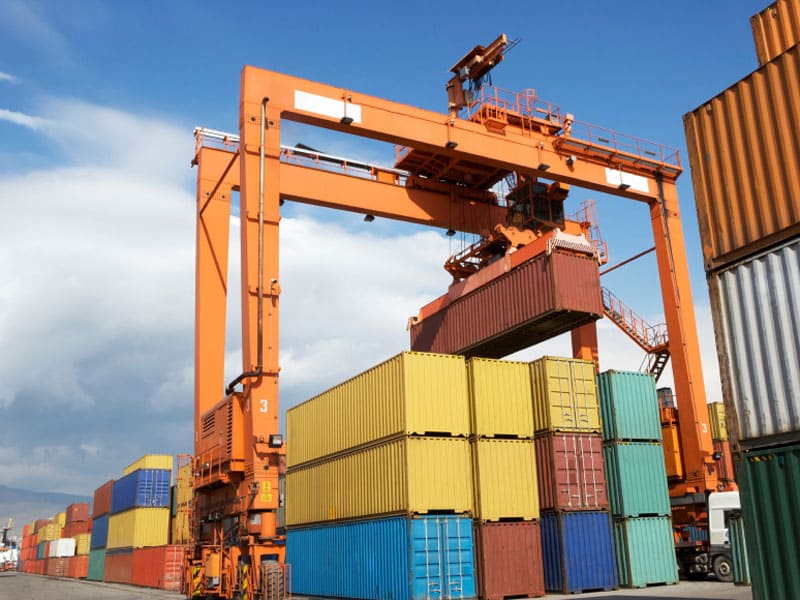
The lithium battery system is one of the main differences in this rubber tyred gantry crane.
The crane can work without an external power cable or conductor rail. That means there is no cable trailing behind the machine while it travels between lifting points. It is particularly useful for temporary yards and construction sites where the grid connection is still being developed.
Battery-powered travel also helps reduce local exhaust emissions and operating noise. That fits well with the industry's wider move toward cleaner construction methods.
Mobile Where the Work Is
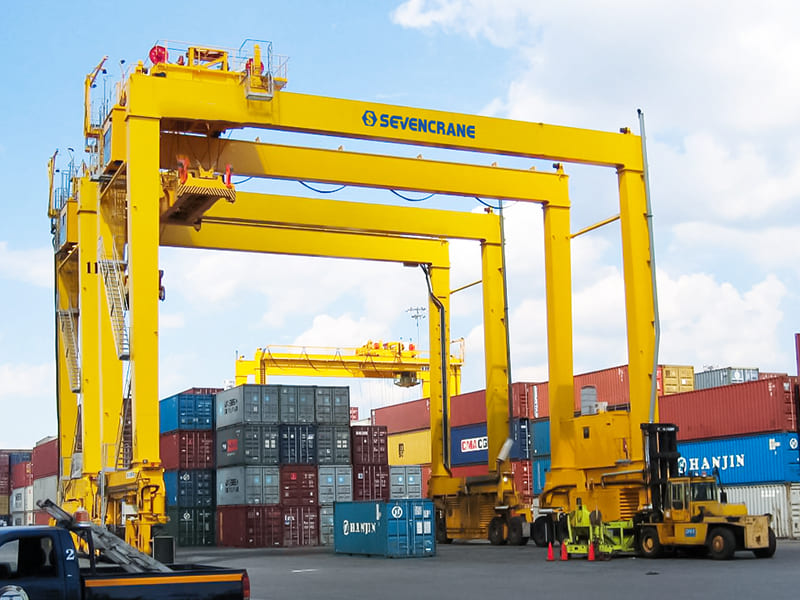
The crane uses heavy-duty solid rubber tires and an independent steering system. There is no need to lay a dedicated track before the crane can start working.
Depending on the configuration, the machine can move between working points and perform different steering functions. This is useful when several components need to be handled in different parts of the same site.
For a RTG crane, mobility is more than a convenience. It can reduce the time spent preparing a new work area and avoid repeated crane dismantling and transport.
Smoother Movement and More Safety Control
Wind turbine components are expensive and often difficult to position. The lifting system therefore needs to be steady and predictable.
SEVENCRANE can equip the RTG crane with lifting and travel protection systems, torque limitation, emergency braking, and dedicated windproof devices. Infrared and ultrasonic sensors can also be used for additional monitoring of the operating area.
The crane uses a compact European-style design. A lower overall height and optimized structure can reduce unnecessary dead weight and energy consumption while keeping the required lifting performance.
From Wind Power Components to Complete Project Support
SEVENCRANE has experience developing customized heavy lifting equipment for different industrial conditions. The design can be adjusted according to lifting capacity, span, lifting height, travel requirements, battery capacity, and site conditions.
Our support also covers the practical part of the project. Drawings, technical communication, factory testing, remote commissioning, and on-site installation guidance can all be arranged according to the project.
For wind turbine manufacturing, component storage, and field construction, a rubber tyred gantry crane powered by a lithium battery can provide a useful combination of mobility, independent power, controlled lifting, and lower on-site emissions.
