


Boat jib crane
Email: info@sevencrane.com
Mobile & Skype & WhatsApp: + 86 182 3712 0067
- Load capacity: 3ton ~20ton
- Lifting height: 3m to 12m or customized
- Hoist unit: wire rope hoist or chain hoist
- Working duty: A5
- Power source: Based on your power supply


What Is a Boat Jib Crane?
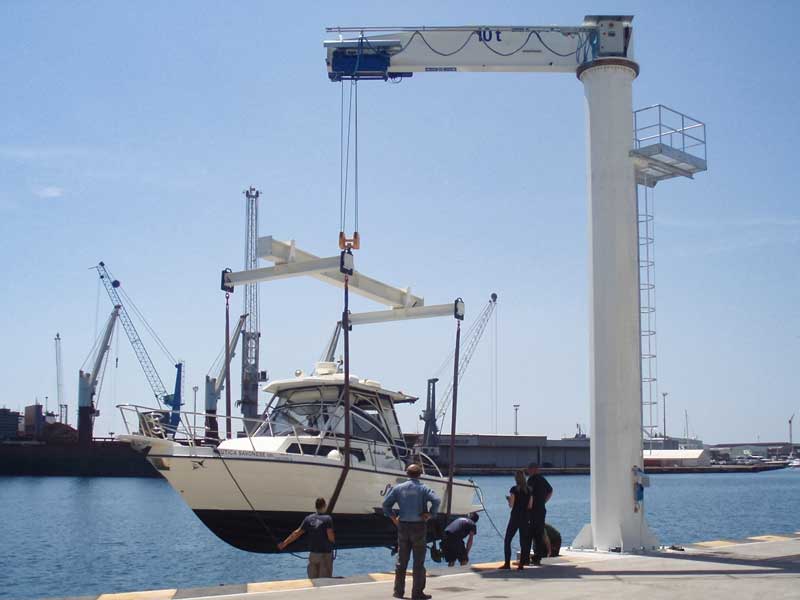
A boat jib crane is a type of lifting equipment specifically designed for handling boats and marine-related loads. Installed typically on docks, marinas, or even onboard vessels, these cranes utilize a horizontal jib arm to lift, lower, and rotate watercraft or heavy marine components. Unlike large harbor cranes, boat jib cranes are usually compact and can be either manually or electrically operated depending on the load and application. Their compact design and efficiency make them indispensable for tasks such as boat launching, retrieval, maintenance, and cargo transfer. The primary objective is to provide safe, convenient, and space-efficient load handling in marine environments.
The Structural Design and Working Principle
Boat jib cranes are structurally composed of a vertical mast (pillar), a horizontal jib arm (boom), a rotating mechanism, and a lifting mechanism such as an electric or manual hoist. The mast is securely fixed to the dock or vessel, and it supports the jib arm that can typically rotate between 180° and 360°. The hoist, which runs along the jib arm, is responsible for raising and lowering the load.
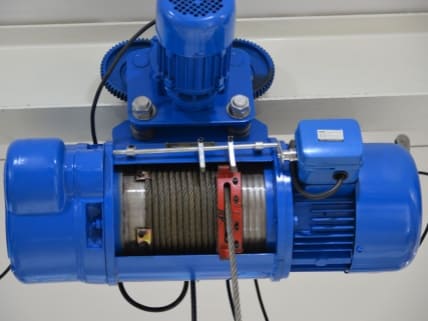
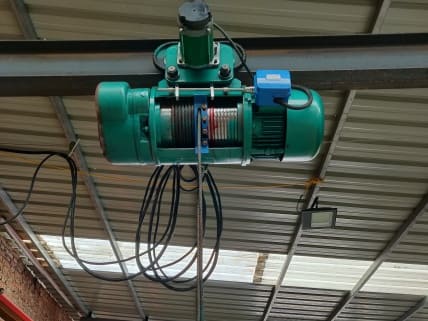
The working principle is based on rotational and vertical movement. The crane operator uses either manual controls or an electric control system to move the load horizontally along the jib and vertically via the hoist. This enables precise placement of boats or cargo. The base structure must be robust and corrosion-resistant to withstand the harsh marine environment.
Key Features That Define a High-Quality Boat Jib Crane
When selecting a boat jib crane, quality is critical to ensure performance and durability. Some of the defining features include:
Corrosion Resistance
Marine environments are notorious for saltwater-induced corrosion. High-quality cranes are made from stainless steel, aluminum alloys, or hot-dip galvanized steel.
Rotational Range
A good crane should offer a wide rotational angle (ideally 360°) for maximum flexibility in handling loads.
Load Capacity
Depending on the intended use, a crane should comfortably handle 500 kg to several tons. Overloading is a major risk factor.
Mobility of the Hoist
The ability to move the hoist smoothly along the jib increases operational versatility.
Ease of Installation and Portability
Many cranes now come with modular bases and mounting options for both permanent and temporary use.
Safety Features
These include emergency stop buttons, load limiters, anti-sway mechanisms, and brake systems.
Top 5 Things to Consider Before Buying a Boat Jib Crane
Before investing in a boat jib crane, consider the following aspects:
**Purpose and Usage Frequency**: Are you using it for seasonal boat handling or daily operations? Frequent use requires more robust features.
**Space Availability**: Evaluate dock space and headroom. Some cranes offer foldable arms for tight spaces.
**Weight and Size of Load**: Select a model that can handle your heaviest boat or equipment safely.
**Power Source**: Choose between manual, electric, or hydraulic models depending on load size and available utilities.
**Budget and Maintenance Costs**: Initial cost, installation fees, and long-term upkeep should be weighed to ensure it fits within your operational budget.
Step-by-Step Guide to Installing a Boat Jib Crane on a Dock
Installing a boat jib crane can be straightforward if done correctly. Here’s a step-by-step guide:
1. **Site Preparation**: Choose a stable section of the dock with reinforced concrete or steel structure. Measure for clearance and access.
2. **Foundation Setup**: Drill anchor bolt holes and install chemical anchors if required. Level the base plate before tightening bolts.
3. **Mount the Mast**: Position the vertical pillar securely. Ensure it is perfectly perpendicular using a spirit level.
4. **Attach the Jib Arm**: With assistance, install the horizontal arm onto the mast, aligning all joints and pins as per manufacturer instructions.
5. **Install the Hoist**: Mount the electric or manual hoist and test its movement along the jib.
6. **Connect Power and Controls**: If using an electric crane, connect the power supply and verify voltage and insulation.
7. **Load Testing and Calibration**: Perform a test lift with a rated load to ensure safety and functionality.
8. **Final Inspection**: Check all bolts, welds, and mechanisms. Lubricate moving parts and secure wiring.
Daily and Monthly Maintenance Tips
To ensure your crane’s long life and safe operation, routine maintenance is crucial:
**Daily Maintenance:**
– Inspect for visible wear or rust on cables, hoists, and joints.
– Clean any salt or dirt buildup with fresh water.
– Test the hoist and emergency stop functionality.
– Check for fluid leaks if hydraulic.
**Monthly Maintenance:**
– Lubricate all moving joints and the hoist trolley track.
– Inspect the electrical connections and control systems.
– Tighten anchor bolts and structural joints.
– Conduct a full operational test with a test load.
– Replace worn-out components like hooks or sheaves.
Frequently Asked Questions About Boat Jib Cranes
1. **What is the typical load capacity?**
– Most boat jib cranes can lift from 250 kg to 5,000 kg.
2. **Can it rotate a full circle?**
– Some models allow 360° rotation, while others offer 180°–220°.
3. **What material is best for marine use?**
– Stainless steel and hot-dip galvanized steel offer the best corrosion resistance.
4. **Is a foundation necessary for installation?**
– Yes, a solid concrete or reinforced platform is needed for stable mounting.
5. **What safety features should I look for?**
– Look for overload limiters, emergency stop, anti-fall hooks, and weatherproof controls.
6. **How long is the service life?**
– With proper care, a boat jib crane can last 10–15 years.
7. **Can it be installed on a floating dock?**
– Only if the dock has adequate structural reinforcement and ballast.
8. **Are custom models available?**
– Yes, we can offer custom height, boom length, and mounting options.

Quality is soul and we sell for future
contact us


