


Rail mounted gantry crane
Email: info@sevencrane.com
Mobile & Skype & WhatsApp: + 86 182 3712 0067
- Load capacity: 5 tons ~ 500 tons
- Crane span: 5m ~ 35m or customized
- Lifting height: 3m to 30m or customized
- Hoist unit: wire rope hoist or chain hoist
- Working duty: A3 ~ A7
- Working temperature:-20 ~ 40 ℃


Overview
What is a Rail Mounted Gantry Crane?
A Rail Mounted Gantry Crane (RMG) is a rail-guided lifting system with a gantry framework spanning between parallel tracks. It features a hoisting mechanism that travels horizontally along the main girder, enabling precise load handling in structured environments like container terminals, rail depots, and steel mills.

Key Components
- Main Girder: Double-box or truss structure for heavy loads (up to 60 tons).
- Legs: Fixed or height-adjustable vertical supports.
- Rail System: Heavy-duty steel tracks (QU80/QU100) for guided movement.
- Hoist System: Electric or hydraulic hoist with wire rope/spreader.
- Control Cabin: Operator station or automated control interface.
Primary Applications
- Container Terminals: Stacking and transferring ISO containers.
- Rail Freight Hubs: Loading/unloading between trains and trucks.
- Steel Mills: Handling coils, plates, and raw materials.
- Bulk Cargo Ports: Managing coal, ore, and grain shipments.
Advantages of the Rail Mounted Gantry Crane Design
A. Precision and Stability
- Guided Movement: Rails ensure straight-line accuracy (±5mm deviation), critical for stacking containers in high-density yards.
- Anti-Sway Technology: AI-controlled hoists minimize load oscillation during lifts.
B. High Load Capacity and Efficiency
- Heavy-Duty Performance: Lift capacities up to 60 tons (containers) or 30 tons (bulk goods).
- Speed Optimization:
- Hoisting: 10–30 m/min (empty), 5–15 m/min (loaded).
- Trolley Travel: 30–60 m/min.
C. Durability in Harsh Environments
- Corrosion Resistance: Hot-dip galvanized steel and epoxy coatings withstand saltwater, humidity, and industrial chemicals.
- Weatherproofing: IP66-rated electrical components operate in rain, snow, or dust.
D. Energy Efficiency
- Regenerative Braking: Converts braking energy into reusable electricity.
- Low-Friction Components: Polyurethane-coated wheels and sealed bearings reduce power consumption.
E. Automation Readiness
- Integration with TOS: Syncs with Terminal Operating Systems for real-time task allocation.
- Remote Monitoring: IoT sensors track performance metrics (e.g., motor temperature, load cycles).
How Does a Rail Mounted Gantry Crane Work?
Step 1: Power-Up and System Check
- The crane receives power via conductor bars or cable reels.
- Automated systems run self-diagnostics (e.g., brake tests, limit switch verification).
Step 2: Load Engagement
- Container Handling:
- Spreaders lock onto container corner castings.
- Load cells verify weight (<90% of SWL).
- Bulk Material Handling:
- Grabs or magnets attach to cargo.
Step 3: Horizontal and Vertical Movement
- Trolley Travel: The hoist moves laterally along the girder to position the load.
- Gantry Travel: The entire crane traverses rails to the target location.
- Hoisting/Lowering: A wire rope drum controlled by a frequency-regulated motor adjusts height.
Step 4: Load Release
- Automated spreaders or hooks disengage once the load is secured.
Step 5: Return to Home Position
- The crane resets for the next task, guided by RFID tags or GPS coordinates.
Cooperation Process: From Inquiry to Operation

Phase 1: Initial Consultation & Needs Assessment
- Client Input: Load type, capacity, span, duty cycle, automation level.
- Site Survey: Engineers evaluate rail alignment, ground strength, and power supply.
Phase 2: Customization & Specifications
- Design Options:
- Manual vs. Automated: Choose between cabin-operated or pendent control cranes.
- Hoist Attachments: Spreaders, grabs, magnets, or hooks.
- Span & Height: Customize to match rail spacing and stacking needs.
Phase 3: Quotation & Agreement
- Transparent Pricing: Breakdown of equipment, installation, and training costs.
- Contract Terms: Delivery timeline, warranty (1–2 years), and payment milestones.
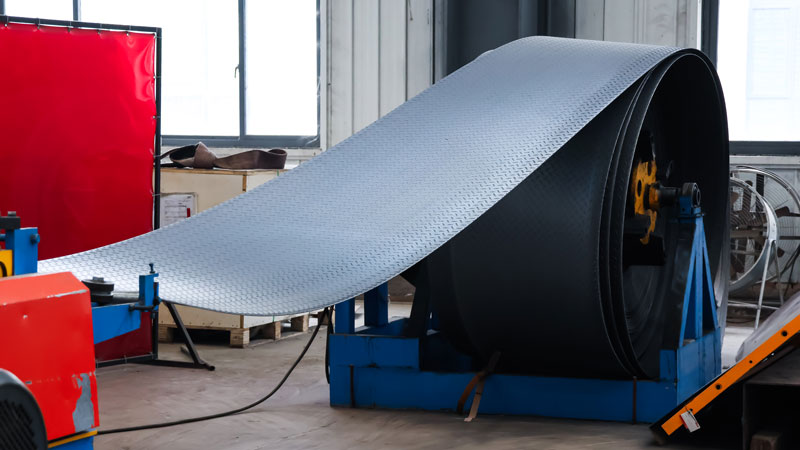
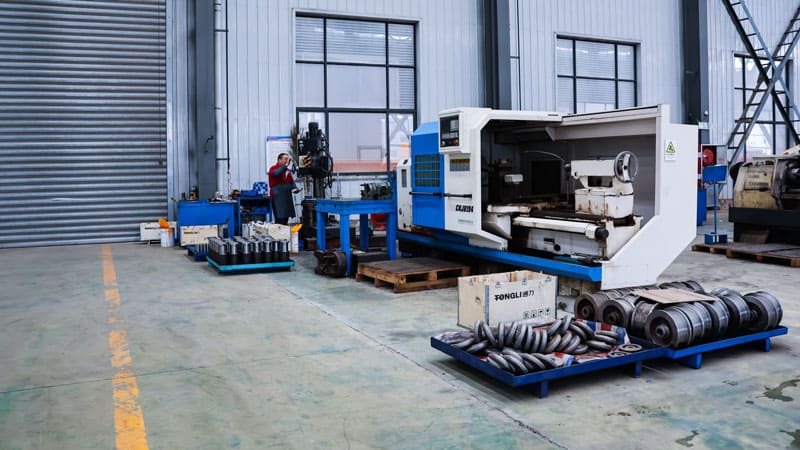
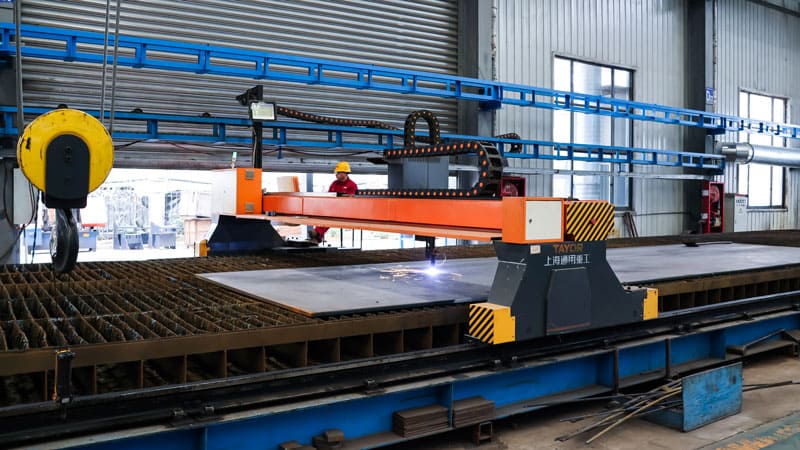
Phase 4: Manufacturing Process
- Material Procurement: Sourcing ASTM/AISI-certified steel.
- Fabrication: CNC cutting, welding, and anti-corrosion treatment.
- Quality Checks:
- NDT (Non-Destructive Testing) for welds.
- Load simulation via FEM analysis.
Phase 5: Delivery & Installation
- Logistics: Flatbed trucks or sea freight for global delivery.
- Installation Steps:
- Rail alignment and fastening.
- Gantry assembly (bolted or welded).
- Electrical and control system integration.
Phase 6: Training & After-Sales Support
- Operator Training: Hands-on sessions for manual control, emergency protocols, and automation software.
- Maintenance Workshops: Teach lubrication schedules and component inspections.
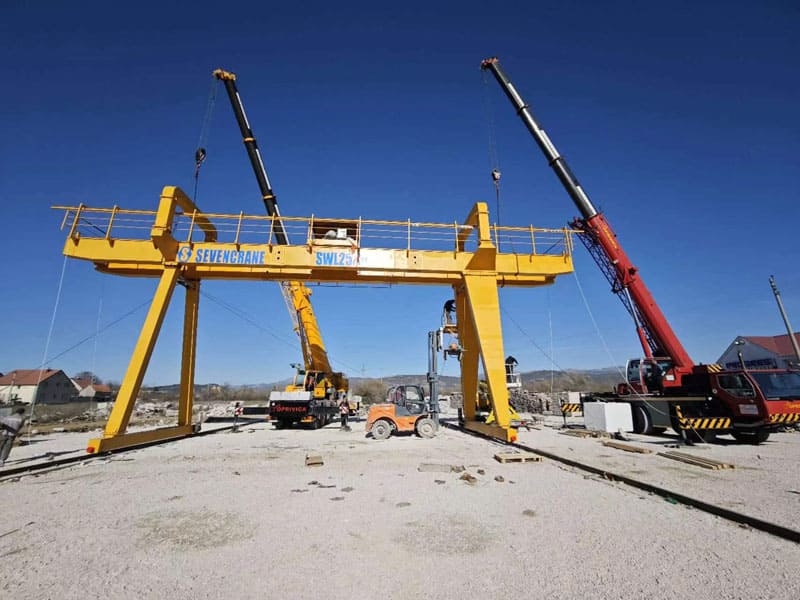
Installation & Commissioning Process
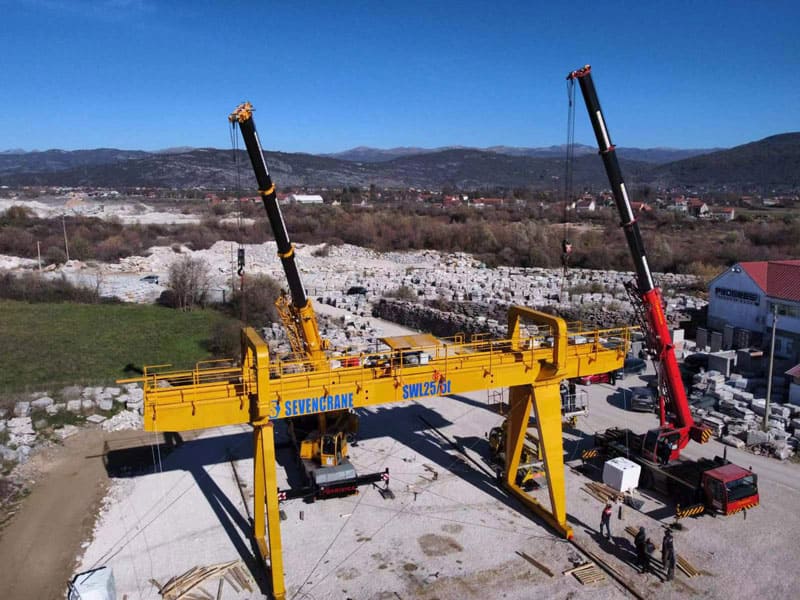
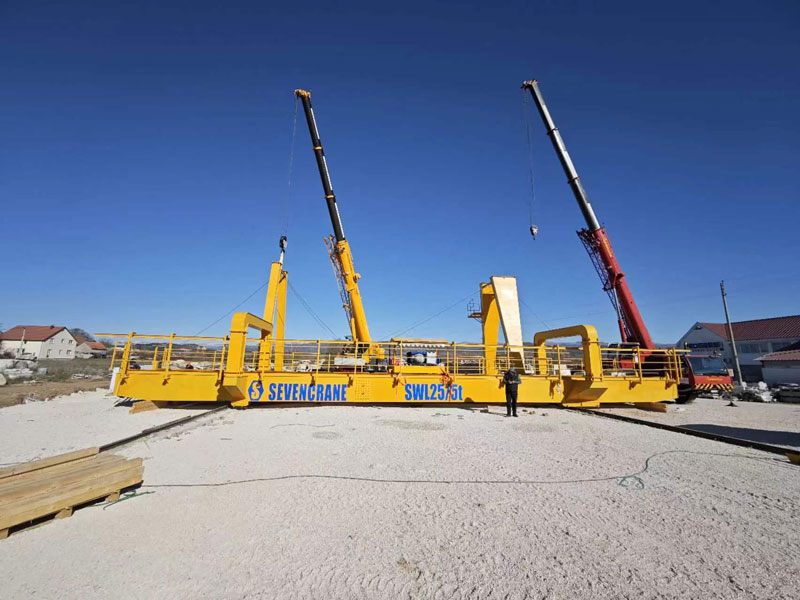
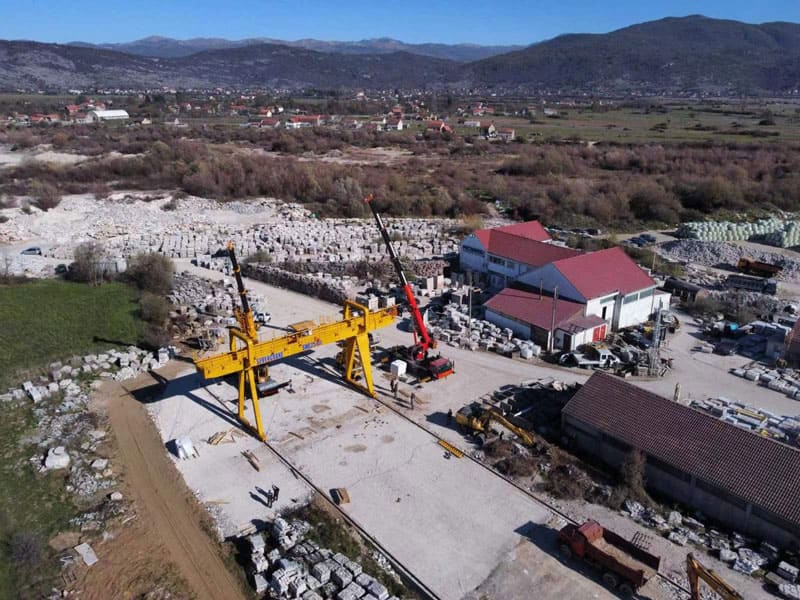
Step 1: Rail Installation
- Subgrade Preparation: Compact soil to 95% Proctor density.
- Concrete Foundation: Pour C35-grade concrete (500mm thickness).
- Rail Fixing: Secure QU100 rails with fishplates and anchor bolts.
Step 2: Crane Assembly
- Leg Erection: Bolt vertical supports to pre-embedded base plates.
- Girder Mounting: Lift main girder via mobile crane and secure to legs.
- Hoist Installation: Attach trolley and hoist mechanism to the girder.
Step 3: Electrical Setup
- Power Supply: Install conductor bars or cable reels along the rail.
- Control Wiring: Connect PLCs, sensors, and operator interfaces.
Step 4: Testing & Commissioning
- No-Load Test: Run all movements (hoist, trolley, gantry) at 100% speed.
- Load Test:
- Static Test: 125% SWL for 10 minutes.
- Dynamic Test: 110% SWL with repeated lifts and stops.
- Safety Checks: Verify limit switches, overload protection, and E-stop functionality.
Comprehensive After-Sales Service
A. Warranty Coverage
- 1–2 Years: Covers defects in materials and workmanship.
- Extended Plans: Optional coverage for wear parts (wheels, wire ropes).
B. Spare Parts Supply
- Global Network: 24/7 access to OEM parts (gearboxes, brakes, sensors).
- Express Shipping: Critical components delivered within 72 hours.
C. Technical Support
- Hotline Assistance: Troubleshooting via phone/video call.
- On-Site Repairs: Certified technicians dispatched for major failures.
D. Preventive Maintenance Packages
- Basic Plan: Quarterly inspections and lubrication.
- Premium Plan: Includes annual load testing and software updates.
WHAT WE NEED TO KNOW BEFORE QUOTE?
1.Lifting capacity–____t
2.Span(distance between 2 parallel rails)–____m
3.Lifting height–____m
4.Cantilever length–____m
5.Power supply–____V____Hz____Phase
6.Special needs

Quality is soul and we sell for future
contact us


