


3 Ton Spider Crane for an Australian Customer
An Australian customer recently visited SEVENCRANE to inspect our Spider Crane and find a suitable model for lifting construction materials. What began as a price inquiry for a 5-ton machine eventually turned into a more detailed discussion about lifting capacity, configuration, and actual working conditions.
The customer initially felt that our quotation was higher than expected. During further communication, we learned that he was also comparing offers from other suppliers. Instead of simply reducing the price, we asked him to share the competing quotation so we could compare the configurations and explain the differences.
Why the Customer Changed from 5 Tons to 3 Tons
After reviewing the competing offer, we discussed the engine, safety devices, and other equipment included in our proposal. These details can affect the price, even when two machines have similar rated capacities.
We also shared customer feedback and a reference project involving a spider crane in Poland, helping him understand how our equipment is used in practical applications.
The customer wanted to see our factory through a video call. Since the inquiry came shortly before a holiday, we agreed to arrange a proper visit after the holiday rather than rush the process.
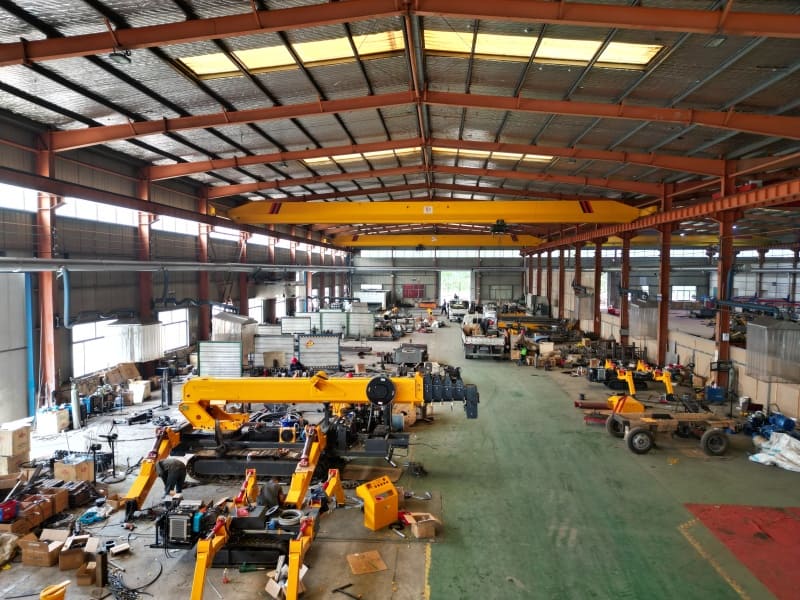
Later, the customer visited our factory in person. During the visit, he tested the 3-ton Spider Crane and found it more suitable for his needs. The trial also gave him a chance to see the machine's operation and ask questions directly to our team.
A 3-Ton Configuration with Practical Accessories
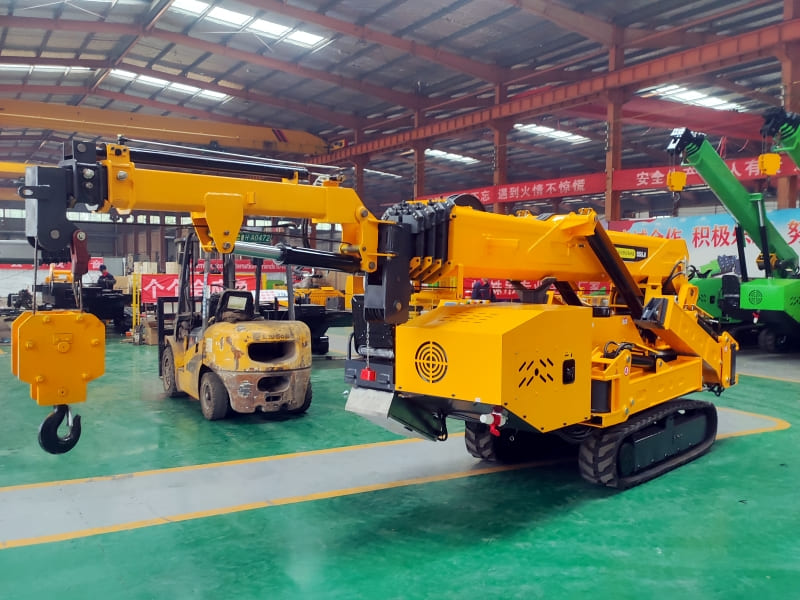
The proposed model is the SS3.0, equipped with a Yanmar engine and an electric motor. It uses wireless remote control with a display and is designed for a 415V, 50Hz, three-phase power supply.
The configuration includes a 3-meter hydraulic fly jib and a 600 kg glass vacuum lifter. Safety features include a torque display with fly jib data, a torque limiter, outrigger alarms, a one-button outrigger function, a three-turn winch warning, and a hook over-winding alarm.
The customer also requested detailed protection and maintenance features. Hydraulic lock valves are required on the main cylinder and each outrigger. Cables must be protected and concealed where possible, and removable pins need chamfered edges.
The machine will have a customized two-color finish: RAL 3028 for the outriggers, main boom, and fly jib, and RAL 5002 for the main structure.
Prepared for Outdoor Use
Since the crane will be used outdoors, the customer also requested a durable waterproof cover large enough to protect the complete machine. Additional supplies include rubber outrigger pads, a spare remote controller with display, one extra remote battery, and 45 meters of spare wire rope.
These details may seem small, but they matter when equipment is used regularly on construction sites. Good protection and readily available spare parts can make daily operation and maintenance easier.
A Potential Long-Term Partnership
After the factory test, we calculated the price for the 3-ton model and prepared to send the formal quotation. The customer said he would arrange payment after returning to Australia.
He also mentioned that, if the machine performs well in actual use, he may return for additional 1-ton, 3-ton, and 5-ton models.
For SEVENCRANE, this project was about more than winning a price comparison. By discussing the technical differences, welcoming the customer to the factory, and letting him test the Spider Crane himself, we helped him make a more informed decision.
The next step is to complete the quotation and move forward with the customer's purchase arrangements. We look forward to building a long-term relationship based on reliable equipment, clear communication, and practical service.


